Why Do Some Relationships Burn Bright and Fast While Others Last Forever?
You know that couple—the one that seemed to combust with passion from day one, posting breathless social media updates about their "soulmate," moving in together after three weeks, and then imploding spectacularly six months later. Meanwhile, your friend Sarah has been with her partner for eight years, and while they never made your heart race with their romance, they're still together, quietly building a life that somehow feels more solid than a rock.
What makes some relationships burn like supernovas—brilliant, intense, and brief—while others glow like steady stars for decades? The answer lies in a complex interplay of attachment styles, neurochemistry, compatibility factors, and the often uncomfortable truth that passion and longevity don't always go hand in hand.
The Neurochemistry of Intensity vs. Stability
When we talk about relationships that "burn bright and fast," we're often describing what psychologists call limerence—that intoxicating cocktail of obsessive thoughts, emotional dependency, and physical longing that can feel like the most important thing that's ever happened to you[1]. Dr. Helen Fisher's brain imaging studies at Rutgers University revealed that people in the throes of passionate love show activity in the ventral tegmental area, the brain's reward system that's also activated by cocaine[2].
This neurochemical high—driven by dopamine, norepinephrine, and phenylethylamine—creates the euphoria, sleeplessness, and obsessive thinking that characterize intense early romance. But here's the catch: this state is biologically unsustainable. Research by Hatfield and Rapson found that intense passionate feelings typically peak within the first 12-18 months of a relationship and then begin to decline as the brain's reward systems adapt[3].
In contrast, relationships that last decades often transition from this passionate love to what researchers call companionate love—characterized by deep affection, trust, and commitment rather than intense arousal. This shift involves different brain chemistry: oxytocin and vasopressin, hormones associated with bonding and attachment, become more prominent[4]. The love feels less like a drug and more like coming home.
Dr. Eli Finkel, a relationship researcher at Northwestern University, argues that relationships characterized by extremely high initial intensity often face greater challenges in transitioning to long-term stability[5]. This doesn't mean intense relationships are doomed, but it does mean they face unique challenges.
Attachment Styles: The Blueprint for How We Love
Your attachment style—formed in early childhood and relatively stable throughout life—profoundly influences whether you gravitate toward intense, volatile relationships or steady, secure ones. Psychologist Mary Ainsworth's groundbreaking research identified four primary attachment styles that play out dramatically in adult relationships[6].
People with anxious attachment often find themselves in those burning-bright relationships. They crave intimacy but fear abandonment, creating a push-pull dynamic that can feel incredibly passionate. "I need you desperately, but I'm terrified you'll leave me" becomes the emotional undertone of their relationships. This anxiety can create intensity—late-night conversations, dramatic reconciliations, the feeling that this relationship is life-or-death important.
Meanwhile, those with secure attachment tend to form relationships that may seem less dramatic but have staying power. They're comfortable with intimacy and don't catastrophize when their partner needs space. Their relationships might not inspire poetry, but they inspire trust.
The most combustible combination? Anxious attachment paired with avoidant attachment. Dr. Amir Levine, author of "Attached," describes this as the "anxious-avoidant trap"—a dynamic where one person's need for closeness triggers the other's need for distance, creating a cycle of pursuit and withdrawal that can feel intensely passionate but is ultimately exhausting[7].
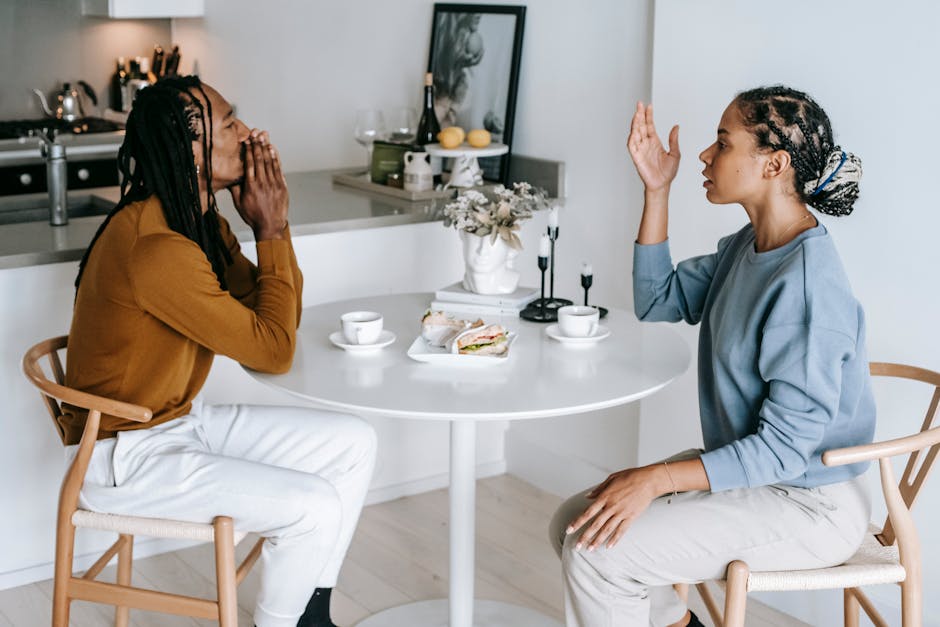
This pattern is remarkably common: emotional pursuit leads to withdrawal, which then intensifies the pursuit. This dynamic can feel incredibly passionate—the highs of reconciliation and the lows of conflict create an emotional intensity that can be mistaken for deep love, when it's actually a manifestation of incompatible attachment needs.
The Paradox of Choice and Compatibility
Modern dating presents us with an unprecedented paradox: infinite choice coupled with the pressure to find "the one." Dating apps have created what psychologist Barry Schwartz calls "the paradox of choice"—when too many options lead to less satisfaction and more second-guessing[8].
Relationships that burn bright and fast often emerge from this environment of endless possibility. When you believe there might be someone even more perfect around the corner, you might unconsciously sabotage good-enough relationships or become addicted to the novelty and intensity of new connections.
Dr. John Gottman's extensive research on relationship stability reveals that lasting couples share specific compatibility factors that have little to do with initial chemistry[9]. His longitudinal studies found that successful long-term relationships are built on what he calls "love maps"—detailed knowledge of your partner's inner world, their dreams, fears, and daily experiences.
The couples in Gottman's research who stayed together for decades weren't necessarily the most passionate initially. Instead, they showed high levels of fondness and admiration for each other, turned toward each other during everyday moments (what Gottman calls "bids for connection"), and had developed effective conflict resolution skills.
Consider the difference: Couple A meets and feels instant, electric chemistry. They spend their first month in a bubble of intensity, having sex multiple times a day and staying up all night talking about their souls. But they've never discussed money, family values, or how they handle stress. Couple B has a pleasant first date, enjoys each other's company, and slowly discovers they share similar life goals, communication styles, and values. The first relationship feels like destiny; the second feels like choice.
Research suggests that Couple B has better long-term prospects, even if their story is less Instagram-worthy.
The Role of Conflict and Growth
Here's where things get counterintuitive: relationships that last forever aren't necessarily the ones without conflict. In fact, some of the most enduring relationships experience significant challenges that actually strengthen their bond over time.
Dr. Julie Gottman distinguishes between "perpetual problems" and "solvable problems" in relationships[10]. Perpetual problems—differences in personality, values, or lifestyle preferences—represent the majority of relationship conflicts and never fully get resolved. What matters isn't whether you have these differences, but how you navigate them.
Relationships that burn bright and fast often implode when they hit their first major perpetual problem because the initial intensity masked fundamental incompatibilities. The passion was so overwhelming that both partners assumed they were perfectly matched, only to discover they have completely different approaches to money, family, or life goals.
Lasting relationships, by contrast, often involve couples who either start with better fundamental compatibility or develop the skills to navigate their differences constructively. They learn what Dr. Dan Wile calls "collaborative discourse"—the ability to discuss problems as teammates rather than adversaries[11].
Many long-term couples report that learning to navigate major disagreements early in their relationship actually strengthened their bond by teaching them how to work through problems as a team rather than viewing conflict as a threat to the relationship itself.
The Timing Factor: Life Stages and Readiness
Sometimes the difference between a brief intense relationship and a lasting one comes down to timing. Psychologist Dr. Ty Tashiro's research on marriage success found that people who marry in their late twenties and early thirties have significantly lower divorce rates than those who marry younger or much older[12].
This isn't just about maturity—it's about life stage alignment. The intense relationship you have at 22 might burn out not because it was "wrong," but because you were both still figuring out who you were. The same person might be perfect for you at 30 when you've both developed a clearer sense of your values and goals.
Dr. Meg Jay, author of "The Defining Decade," argues that many twentysomething relationships fail not because of incompatibility, but because one or both partners aren't ready for the level of commitment that lasting love requires[13]. The intensity might be real, but the foundation isn't solid enough to support a lifetime together.
Conversely, some relationships that seem "boring" to outside observers are actually perfectly calibrated for where both people are in their lives. They might not generate passionate poetry, but they provide the stability and support that both partners need to grow.
The Myth of "The One" vs. The Reality of Choice
Perhaps the most significant factor determining whether relationships burn bright or last long is our underlying belief about love itself. People who believe in "soulmates" or "the one" often create more intense but less stable relationships than those who view love as a choice and commitment as a practice.
Research by Dr. C. Raymond Knee found that people who believe in romantic destiny experience more passionate beginnings but also give up more easily when problems arise[14]. If this person is supposed to be your soulmate, then conflict or difficulty feels like evidence that you were wrong about them.
In contrast, people who view love as something you build together—what researchers call "growth beliefs"—tend to work through challenges more effectively. They don't expect perfection from the beginning; they expect to create something good together over time.
This doesn't mean settling for someone you're not attracted to or excited about. But it does mean understanding that the butterflies-in-your-stomach feeling isn't necessarily a predictor of long-term compatibility, and its absence doesn't mean you're with the wrong person.
Dr. Eli Finkel suggests thinking of relationships as "sufficiently good" rather than perfect[15]. A sufficiently good relationship meets your core needs for intimacy, support, and growth, even if it doesn't fulfill every romantic fantasy you've ever had.
When Intensity and Longevity Coexist
Before we conclude that passionate relationships are doomed to fail, it's worth noting that some couples manage to maintain both intensity and longevity. What sets these relationships apart?
First, they successfully navigate the transition from passionate to companionate love without losing all elements of passion. Dr. Arthur Aron's research on "self-expansion" in relationships suggests that couples who regularly engage in novel, challenging activities together can maintain higher levels of relationship satisfaction over time[16]. They don't just settle into routine; they continue to grow and discover new things about each other.
Second, they develop what Dr. Sue Johnson calls "secure attachment" within the relationship itself[17]. Even if one or both partners started with insecure attachment styles, they create a relationship dynamic that provides safety and security, allowing passion to coexist with stability.
Third, they maintain individual identities and interests. Relationships that burn out often involve complete merger—two people who lose themselves in each other. Lasting passionate relationships involve two whole people who choose to share their lives while maintaining their individual growth and interests.
Successful long-term couples often describe their relationships as continuing to evolve and surprise them. They maintain curiosity about each other and continue to grow both individually and together, finding new dimensions to explore even after years or decades together.
Building Relationships That Last
If you're someone who tends toward intense but short-lived relationships, here are research-backed strategies for building something more lasting:
Slow down the physical and emotional intimacy. Dr. Helen Fisher recommends what she calls "slow love"—taking time to really know someone before becoming completely enmeshed[18]. This doesn't mean playing games, but it does mean maintaining some individual identity and perspective during the early stages.
Pay attention to how you handle conflict. Do you fight to win or to understand? Do you attack the person or address the problem? Dr. Gottman's research shows that couples who master repair attempts—small gestures that de-escalate tension during arguments—have much better long-term prospects[19].
Build friendship alongside romance. The couples in Gottman's research who stayed happily married for decades genuinely liked each other as people. They were interested in each other's thoughts, supportive of each other's goals, and enjoyed spending time together even when they weren't being romantic.
Discuss the practical stuff early. Money, family, career goals, lifestyle preferences—these conversations might not be sexy, but they're predictive of long-term success. Better to discover incompatibilities early than after you've built a life together.
Cultivate realistic expectations. No relationship will fulfill all your emotional needs all the time. Lasting love involves accepting your partner's limitations and choosing to love them anyway, while also maintaining other sources of fulfillment and support in your life.
What if the entire premise of comparing "burning bright" versus "lasting forever" relationships reflects a Western cultural bias that prioritizes individual romantic fulfillment over other relationship purposes? In many cultures, marriages begin with practical considerations and develop emotional depth over time, while in others, serial relationships that serve different life stages are perfectly normal and healthy—suggesting our binary framework might be missing the bigger picture of how human connection actually works.
The research cited focuses heavily on neurotypical, heterosexual couples, but what about the millions of people whose brains and relationship patterns don't fit these models? Neurodivergent individuals, LGBTQ+ couples facing unique social pressures, and people from different socioeconomic backgrounds might experience entirely different relationship dynamics that challenge the "passion versus stability" narrative—yet their experiences remain largely invisible in mainstream relationship science.
Key Takeaways
- Intense passion and long-term stability often work against each other due to different neurochemical processes and attachment dynamics
- Secure attachment styles and fundamental compatibility are stronger predictors of relationship longevity than initial chemistry
- Lasting relationships are built on friendship, effective conflict resolution, and shared values rather than just passionate attraction
- The belief that love is something you build together (rather than find ready-made) leads to more stable relationships
- Some couples can maintain both passion and longevity through continued growth, novel experiences, and secure attachment within the relationship
- Slowing down early intimacy and focusing on compatibility can help those prone to intense but brief relationships build something more lasting
References
- Tennov, Dorothy. Love and Limerence: The Experience of Being in Love. Stein and Day, 1979.
- Fisher, Helen. "Lust, Attraction, and Attachment in Mammalian Reproduction." Human Nature, vol. 9, no. 1, 1998, pp. 23-52.
- Hatfield, Elaine, and Richard L. Rapson. "Passionate Love and Sexual Desire." Handbook of Sexuality in Close Relationships, Lawrence Erlbaum Associates, 2004, pp. 189-217.
- Young, Larry J., and Zuoxin Wang. "The Neurobiology of Pair Bonding." Nature Neuroscience, vol. 7, no. 10, 2004, pp. 1048-1054.
- Finkel, Eli J. The All-or-Nothing Marriage. Dutton, 2017.
- Ainsworth, Mary D. Salter, et al. Patterns of Attachment: A Psychological Study of the Strange Situation. Lawrence Erlbaum Associates, 1978.
- Levine, Amir, and Rachel Heller. Attached: The New Science of Adult Attachment. Tarcher Perigee, 2010.
- Schwartz, Barry. The Paradox of Choice: Why More Is Less. HarperCollins, 2004.
- Gottman, John M. The Seven Principles for Making Marriage Work. Harmony Books, 2015.
- Gottman, Julie Schwartz, and John M. Gottman. Eight Dates: Essential Conversations for a Lifetime of Love. Workman Publishing, 2019.
- Wile, Daniel B. After the Honeymoon: How Conflict Can Improve Your Relationship. John Wiley & Sons, 1988.
- Tashiro, Ty. The Science of Happily Ever After. Harlequin, 2014.
- Jay, Meg. The Defining Decade: Why Your Twenties Matter. Twelve, 2012.
- Knee, C. Raymond. "Implicit Theories of Relationships: Assessment and Prediction of Romantic Relationship Initiation, Coping, and Longevity." Journal of Personality and Social Psychology, vol. 74, no. 2, 1998, pp. 360-370.
- Finkel, Eli J., et al. "The Suffocation Model: Why Marriage in America Is Becoming an All-or-Nothing Institution." Current Directions in Psychological Science, vol. 24, no. 3, 2015, pp. 238-244.
- Aron, Arthur, et al. "Couples' Shared Participation in Novel and Arousing Activities." Journal of Personality and Social Psychology, vol. 78, no. 2, 2000, pp. 273-284.
- Johnson, Sue. Hold Me Tight: Seven Conversations for a Lifetime of Love. Little, Brown and Company, 2008.
- Fisher, Helen. Anatomy of Love: A Natural History of Mating, Marriage, and Why We Stray. W. W. Norton & Company, 2016.
- Gottman, John M., and Nan Silver. What Makes Love Last?: How to Build Trust and Avoid Betrayal. Simon & Schuster, 2012.