Why does Tesla's self-driving car still need a human driver?
Tesla's Full Self-Driving (FSD) capability has been one of the most anticipated and controversial features in the automotive industry. Despite years of development, billions in investment, and bold promises from CEO Elon Musk, Tesla vehicles equipped with FSD still require constant human supervision. This isn't just regulatory red tape—it reflects fundamental technical, safety, and legal challenges that continue to prevent truly autonomous driving from becoming reality.
The Current State of Tesla's FSD Technology
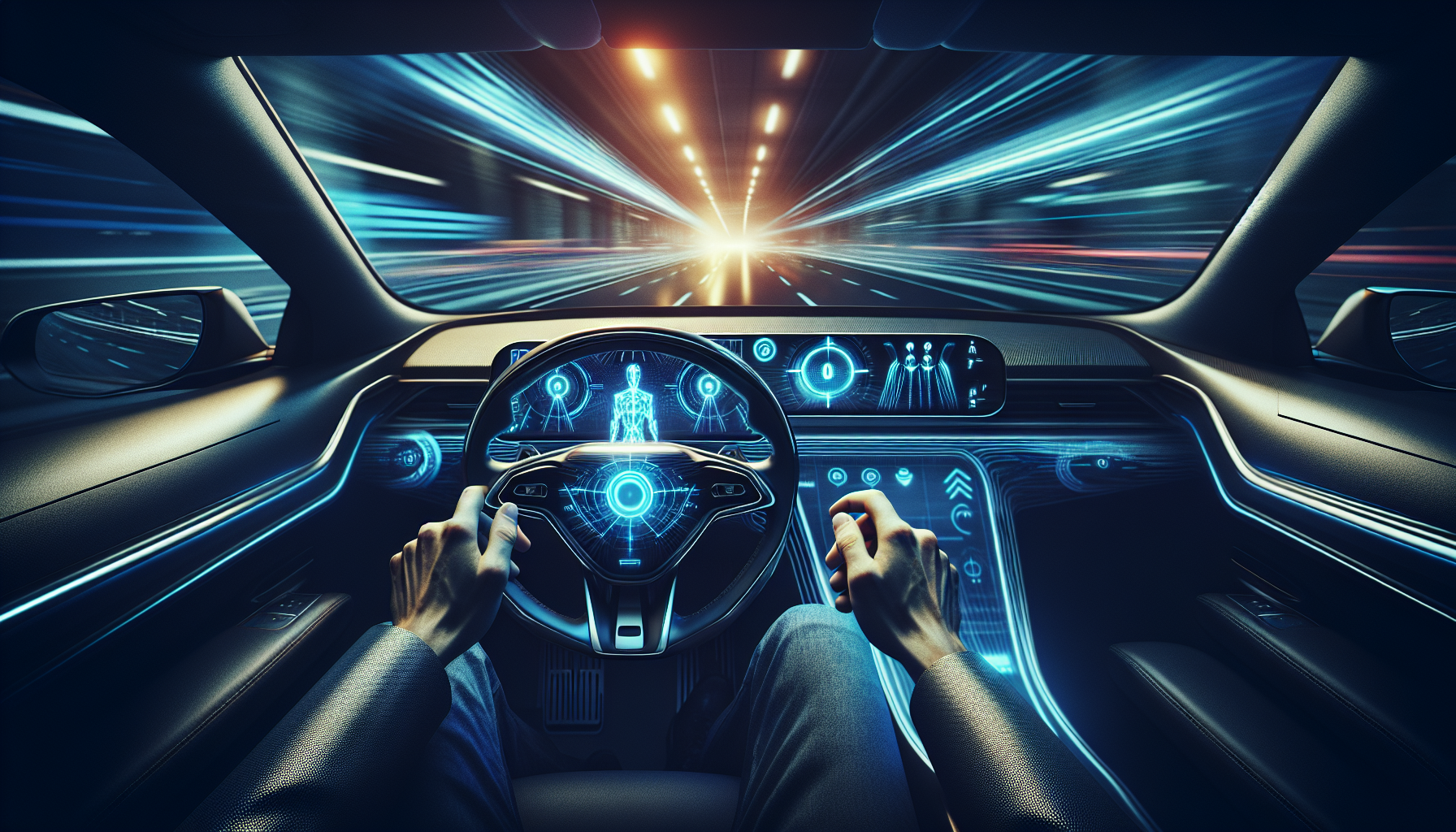
Tesla's Full Self-Driving system represents the company's most advanced driver assistance technology, but it remains classified as a Level 2 automated driving system under SAE International standards[1]. This means that while the system can control both steering and acceleration/deceleration, it requires continuous human supervision and the driver must remain ready to take control at any moment.
The FSD system utilizes a neural network trained on millions of miles of driving data collected from Tesla's fleet. The technology relies primarily on computer vision through eight cameras positioned around the vehicle, rather than the LiDAR sensors used by many competitors[2]. While this approach has shown impressive capabilities in controlled scenarios, it has also revealed significant limitations in real-world driving conditions.
Tesla began releasing FSD Beta to a small group of drivers (approximately 1,000 initially) in late 2020, gradually expanding to more users over subsequent years. However, even in its most recent iterations, the system continues to require active driver monitoring and intervention[3].
Technical Limitations and Safety Concerns
The primary reason Tesla's FSD still requires human oversight stems from fundamental technical challenges that current artificial intelligence cannot fully solve. Computer vision systems, while sophisticated, struggle with edge cases—unusual or unexpected situations that weren't adequately represented in training data.
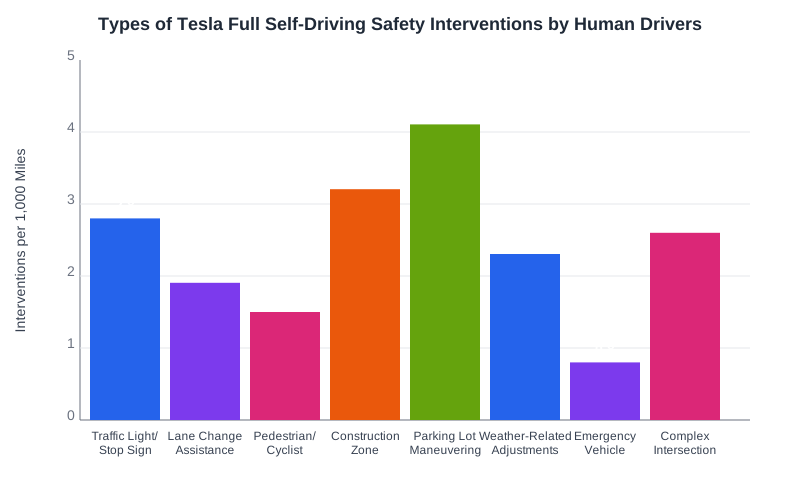
Tesla's camera-only approach has proven particularly challenging in adverse weather conditions. Heavy rain, snow, fog, or direct sunlight can significantly impair the system's ability to accurately perceive the environment. Unlike human drivers who can adapt based on contextual understanding, current AI systems lack the nuanced reasoning capabilities needed to handle these situations safely[5].
Safety incidents involving Tesla's Autopilot and FSD systems have been extensively documented. The National Highway Traffic Safety Administration (NHTSA) has investigated multiple crashes involving Tesla vehicles using advanced driver assistance features, finding that in many cases, the systems failed to adequately respond to emergency vehicles, construction zones, or other hazardous situations[6].
One significant challenge is the system's difficulty understanding context and intent. While FSD can recognize objects like vehicles, pedestrians, and traffic signs, it struggles to predict human behavior or interpret complex traffic situations requiring judgment calls. For example, understanding when a construction worker is directing traffic or recognizing that a pedestrian is about to cross unexpectedly requires contextual reasoning that current AI systems haven't mastered[7].
Regulatory and Legal Framework
The regulatory landscape surrounding autonomous vehicles remains complex and evolving. In the United States, the Department of Transportation and NHTSA have established guidelines for autonomous vehicle testing and deployment, but they have not yet approved any system for fully unsupervised operation on public roads[8].
Tesla's FSD system currently operates under existing regulations that govern advanced driver assistance systems rather than fully autonomous vehicles. This regulatory classification requires that drivers remain engaged and ready to take control, which is why Tesla includes warnings and monitoring systems to ensure driver attention.
The legal liability framework also presents challenges. Current laws generally hold human drivers responsible for vehicle operation, but the transition to fully autonomous systems raises complex questions about liability when accidents occur. Until these legal frameworks are clarified and autonomous systems prove their safety beyond doubt, regulatory bodies are unlikely to approve unsupervised operation[10].
Comparison with Industry Standards
Tesla's approach to autonomous driving differs significantly from other industry players. Companies like Waymo, Cruise, and Aurora have focused on achieving full autonomy in limited geographic areas using high-definition maps and multiple sensor types including LiDAR[11]. These companies have generally taken a more conservative approach, extensively testing their systems in controlled environments before limited public deployment.
Waymo, for instance, operates a fully autonomous ride-hailing service in Phoenix, Arizona, but only within a carefully mapped and controlled operating domain[12]. This geofenced approach allows for more predictable operating conditions but limits scalability compared to Tesla's vision of a general-purpose autonomous driving system.
Tesla's strategy of deploying beta software to consumers while requiring human supervision represents a unique approach in the industry. While this has allowed Tesla to collect vast amounts of real-world driving data, it has also raised questions about using public roads as testing grounds for unfinished autonomous driving technology[13].
Economic and Business Implications
The requirement for human supervision significantly impacts Tesla's business model and the broader autonomous vehicle market. Tesla has positioned FSD as a key differentiator and revenue driver, with pricing that has varied over time, reaching as high as $15,000 in 2022[14]. However, the limited capabilities of current FSD technology have led to customer complaints and regulatory scrutiny.
The promise of fully autonomous vehicles has been a major factor in Tesla's valuation, with investors pricing in the potential for a future robotaxi network. However, the continued need for human supervision delays these revenue opportunities and raises questions about the timeline for achieving true autonomy.
Insurance implications also play a role in maintaining human driver requirements. Insurance companies currently base their models on human drivers being in control of vehicles. The transition to fully autonomous systems would require fundamental changes to insurance frameworks, risk assessment, and liability coverage[16].
Future Outlook and Challenges
Despite current limitations, Tesla continues to invest heavily in autonomous driving technology. The company has developed custom AI chips and is building a supercomputer called Dojo specifically for training neural networks on driving data[17]. Elon Musk has repeatedly predicted that full autonomy is imminent, though these timelines have consistently proven overly optimistic.
The path to removing human drivers from Tesla vehicles likely requires several breakthrough developments. These include more robust AI systems capable of handling edge cases, improved sensor technology for adverse conditions, comprehensive regulatory approval processes, and resolution of legal liability frameworks[18].
Some experts argue that achieving true autonomy may require a hybrid approach combining Tesla's neural network advances with additional sensor technologies and more conservative deployment strategies. Others suggest that full autonomy may only be achievable in specific, controlled environments rather than as a general-purpose solution[19].
While critics frame Tesla's human supervision requirement as a technical failure, it could represent a more pragmatic path to autonomy than competitors' approaches. Unlike geofenced systems that operate in carefully controlled environments, Tesla's strategy allows its AI to learn from millions of diverse real-world scenarios that Waymo and Cruise systems never encounter, potentially building more robust autonomous capabilities in the long term.
The narrative that Tesla is "using public roads as a testing ground" may overlook the reality that current FSD users report significant value from the system despite supervision requirements, with many willing to pay premium prices for the technology. Rather than viewing human oversight as a limitation, this could be seen as a successful intermediate product that generates revenue while building toward full autonomy—a business model that pure research approaches cannot match.
Key Takeaways
- Tesla's FSD remains a Level 2 system requiring constant human supervision due to technical limitations in handling edge cases and adverse conditions
- Safety concerns documented by NHTSA investigations highlight the system's inability to reliably navigate emergency situations and construction zones
- Current regulatory frameworks do not permit unsupervised autonomous operation, requiring human drivers to remain engaged and liable
- Tesla's camera-only approach differs from competitors who use multiple sensor types and operate in limited geographic areas
- The continued need for human supervision impacts Tesla's business model and delays the promised robotaxi revenue opportunities
- Achieving true autonomy will likely require technological breakthroughs, regulatory changes, and resolution of legal liability frameworks
References
- SAE International. "Levels of Driving Automation Standard." SAE International, 2018.
- Tesla, Inc. "Tesla AI." Tesla Official Website, 2024.
- National Highway Traffic Safety Administration. "Automated Vehicles for Safety." NHTSA, 2024.
- Reuters Staff. "Tesla Autopilot probe focuses on how system detects, responds to emergency vehicles." Reuters, August 16, 2021.
- National Highway Traffic Safety Administration. "Tesla Recall Advisory." NHTSA, December 2023.
- Kalra, Nidhi and Susan M. Paddock. "Driving to Safety: How Many Miles of Driving Would It Take to Demonstrate Autonomous Vehicle Reliability?" RAND Corporation, 2016.
- U.S. Department of Transportation. "Automated Vehicles." DOT, 2024.
- Anderson, James M. "Autonomous Vehicle Technology: A Guide for Policymakers." RAND Corporation, 2016.
- Waymo LLC. "Safety Approach and Performance." Waymo, 2024.
- Waymo. "Waymo One is now fully autonomous for all riders in Downtown Phoenix." Waymo Blog, August 2022.
- Stilgoe, Jack. "Machine Learning, Social Learning and the Governance of Self-Driving Cars." Social Studies of Science, 2018.
- Tesla, Inc. "Full Self-Driving Capability." Tesla, 2024.
- Swiss Re Institute. "Autonomous vehicles: the insurance implications of a mobility revolution." Swiss Re, 2021.
- Tesla, Inc. "Tesla Dojo Supercomputer." Tesla AI Day, 2021.
- Taeihagh, Araz and Hazel Si Min Lim. "Governing autonomous vehicles: emerging responses for safety, liability, privacy, cybersecurity, and industry risks." Transport Reviews, 2019.
- Shladover, Steven E. "Connected and automated vehicle systems: Introduction and overview." Journal of Intelligent Transportation Systems, 2018.