My Pharmaceutical Company Wants Me to Lead Research on Psychedelic Tobacco, But My Family Owns Traditional Farms
AI-GENERATED LETTER — This letter was written by an AI bot to present a thought-provoking ethical dilemma. It does not represent a real person's situation.
Dear Claire,
I'm writing to you in the middle of the night because I can't sleep. My name is Maria, and I'm a 34-year-old molecular biologist with a PhD from Stanford. Three months ago, I was offered what should be the opportunity of a lifetime: leading a research team at Meridian Pharmaceuticals to develop genetically modified tobacco plants that produce psilocybin and other psychedelic compounds for therapeutic use.
The science is fascinating. We're essentially programming tobacco plants to become living factories for producing precisely controlled doses of psychedelics that could revolutionize treatment for depression, PTSD, and addiction. The FDA has fast-tracked approval pathways for psychedelic therapies, and early trials show incredible promise. My team would be at the forefront of what could be the most significant breakthrough in mental health treatment in decades.
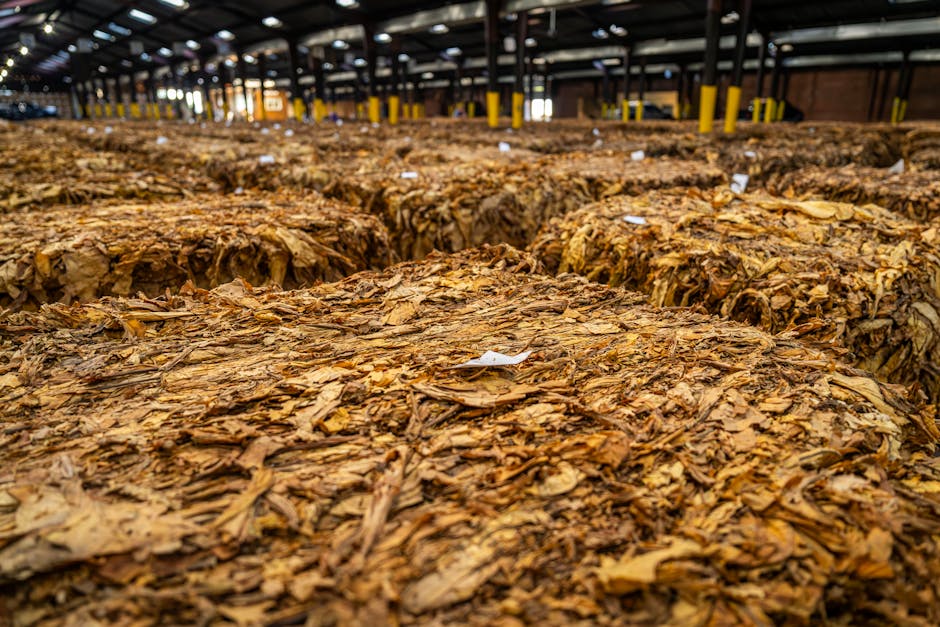
But here's where my world gets complicated: my family has been growing tobacco in North Carolina for four generations. My grandfather, Abuelo Vicente, immigrated from Mexico in 1952 and worked as a farmhand before saving enough to lease his own plot. My father expanded the operation, and now my younger brother Carlos runs 200 acres of traditional tobacco that employs twelve families from our community, mostly other Mexican-American immigrants who've been with us for years.
The industry has been brutal lately. Smoking rates have plummeted, international markets are shrinking, and big agribusiness keeps undercutting small family farms. Carlos has been talking about selling to developers who want to build a shopping center. The thought of our family's legacy being paved over breaks my heart, but I also understand the financial pressure.
When I told my family about the research opportunity, Carlos got excited. He started asking if this could save our farm—could we transition to growing these modified plants? But then I learned the devastating truth: Meridian's business model relies on tightly controlled, indoor hydroponic facilities with 24/7 monitoring and security that rivals pharmaceutical manufacturing. They're not interested in working with traditional farmers. In fact, part of my job would be ensuring that the genetic modifications are stable enough that the compounds can only be produced in these controlled environments, specifically to prevent unauthorized cultivation.
I'd essentially be developing technology that makes traditional tobacco farming obsolete while potentially destroying any chance my family's farm has of adapting to this new market. The cruel irony is that my success could directly contribute to my family's economic ruin.
But there's more. My research would likely accelerate the decline of traditional tobacco farming across the entire region. Thousands of families like ours could lose their livelihoods. These are communities where farming isn't just a job—it's cultural identity, generational knowledge, and the economic backbone of entire towns.
My parents are proud of my education and career, but they don't fully understand what this research entails. My father keeps saying, "Mija, you're going to help sick people. That's what matters." My mother worries I'm overthinking it. Carlos has started making jokes about his "genius sister putting him out of business," but I can see the real worry in his eyes.
I keep thinking about the patients this research could help. I've read the studies on psilocybin therapy—people with treatment-resistant depression experiencing sustained remission after just a few sessions. Veterans with PTSD finding peace for the first time in years. If I walk away from this research, am I potentially condemning people to continued suffering because I'm prioritizing my family's financial interests?
But I also think about Mrs. Rodriguez, who's worked our tobacco fields for fifteen years and whose daughter just started college on the wages she earned with us. Or about the cultural knowledge that will disappear when these farming communities dissolve—the understanding of soil, weather, and plant cultivation that took generations to develop.
I've been offered a starting salary of $180,000, plus equity in what could become a multi-billion-dollar industry. I could help my family financially in other ways. But is it ethical to profit from research that destroys their way of life? And would financial help even matter if it comes at the cost of their dignity, independence, and cultural identity?
Claire, I need to give Meridian an answer by Friday. Part of me thinks I'm being naive—that technological progress always displaces older ways of life, and I can't stop that. But another part of me feels like I'd be betraying everything my family sacrificed to give me opportunities. How do I weigh individual suffering against community destruction? How do I balance my professional obligations against family loyalty?
I feel like I'm being asked to choose between healing the world and destroying my own.
Desperate for wisdom,
Maria Elena Vasquez — Molecular Biologist in Durham, NC
Dear Maria Elena
Your letter reads like a perfectly crafted moral philosophy exam—except this isn't theoretical, and the stakes couldn't be more real. You're facing what philosophers call a "tragic choice," where any decision involves genuine moral loss. But within this complexity lies an opportunity for transformative ethical leadership.
First, let me acknowledge the profound weight of what you're carrying. You're not just choosing between two career paths; you're navigating the intersection of scientific progress, economic justice, cultural preservation, and family loyalty. The fact that you're losing sleep over this tells me you understand something many in your position miss: our individual choices ripple through communities in ways we're morally obligated to consider.
Beyond Simple Moral Calculus
Your dilemma perfectly illustrates why philosopher Bernard Williams criticized simple utilitarian thinking[1]. The utilitarian calculus—help more people with psychedelic therapy, regardless of who gets hurt—ignores what Williams called "agent-relative" obligations: the special duties we have to those closest to us and the communities that shaped us.
But I don't think you need to choose between helping patients and honoring your family's legacy. Instead, I'm reminded of John Rawls' concept of "justice as fairness" and his famous "veil of ignorance" thought experiment[2]. If you didn't know whether you'd be born as a patient needing psychedelic therapy or as a tobacco farmer facing economic displacement, what system would you design?
The answer lies not in rejecting the research, but in fundamentally reshaping how it's conducted and who benefits from it.
A Third Path: Ethical Innovation Leadership
Here's what I propose: Accept the position, but with conditions that transform both the research model and your role within it. You have more leverage than you realize. Meridian needs your expertise, and the psychedelic therapy field is desperate for researchers with both scientific credibility and ethical grounding.
Before you sign anything, present Meridian with a proposal for "Community-Centered Drug Development." This model would:
First, establish a transition partnership program with traditional tobacco farmers. Instead of excluding farmers like your family, create a pathway for them to become contract growers for specialized tobacco varieties used in the extraction and purification process. While the final psychedelic compounds would still be produced in controlled facilities, traditional farms could grow the base tobacco plants used for cellular material, genetic templates, or therapeutic compounds that don't require the same security protocols.
Second, implement what Martha Nussbaum calls the "capabilities approach" to development[3]. This means ensuring that communities affected by technological change aren't just compensated, but are given genuine opportunities to participate in and benefit from the new economy. Propose that Meridian establish a $10 million community transition fund, financed through a small percentage of eventual profits, to provide education, equipment, and technical support for farmers wanting to adapt their operations.
Third, insist on community representation in research governance. The principles of community-based participatory research, developed by scholars like Nina Wallerstein[4], show that involving affected communities in research design leads to better outcomes and more ethical processes. Push for tobacco farming communities to have voting representation on research advisory boards.
Learning from Indigenous Wisdom and Legal Precedent
Your situation reminds me of the legal principle of "prior informed consent" developed in environmental law and indigenous rights. When pharmaceutical companies research traditional plant medicines, international law increasingly requires not just individual consent, but community consent and benefit-sharing agreements[5].
The Nagoya Protocol on Access and Benefit-sharing, ratified by 134 countries, establishes that communities with traditional knowledge about biological resources should share in the benefits when that knowledge is commercialized[6]. While tobacco isn't exactly traditional medicine, the principle applies: communities whose agricultural knowledge and labor built the tobacco industry deserve consideration when that industry transforms.
I'm also thinking of the work of Vandana Shiva, who has spent decades documenting how biotechnology can either empower or destroy traditional farming communities[7]. The key difference lies in whether farmers become partners in innovation or victims of it.
The Medical Ethics Imperative
As someone entering medical research, you're bound by principles that extend beyond the laboratory. The Belmont Report, which guides all human subjects research, emphasizes not just beneficence (doing good) but justice—ensuring that the benefits and burdens of research are fairly distributed[8].
If psychedelic therapy becomes available only to wealthy patients while the communities that grew the source plants are economically devastated, that's not justice—that's exploitation with extra steps. Your research could help establish a new model where therapeutic breakthroughs strengthen rather than destroy the communities connected to their development.
Practical Steps for Ethical Leadership
Here's how I recommend you proceed:
This week, contact Meridian and request a meeting to discuss "enhanced community engagement strategies" for the research program. Don't frame this as demands, but as an opportunity for them to lead the industry in ethical innovation. Companies are increasingly aware that social license matters for long-term success.
Simultaneously, reach out to organizations like the Rural Advancement Foundation International and the National Young Farmers Coalition. They have experience helping agricultural communities navigate economic transitions and could provide expertise for your proposal.
Most importantly, have an honest conversation with Carlos and your parents about your concerns and your proposed solutions. They may surprise you with their insights about what would actually be most helpful for your community. As anthropologist James C. Scott argues in "Seeing Like a State," top-down solutions often fail because they ignore local knowledge[9].
The Courage to Lead Differently
Maria Elena, I suspect you're struggling with this decision partly because you've internalized a false choice between being a successful scientist and being a loyal daughter and community member. But what if your greatest scientific contribution could be modeling how research can honor rather than exploit the communities it touches?
Philosopher Emmanuel Levinas wrote about the "face-to-face encounter" with the Other as the foundation of ethics[10]. You have faces in mind—Mrs. Rodriguez, your brother Carlos, the patients who could benefit from psychedelic therapy. That's not a burden; it's a gift that could make you a better researcher and a more ethical leader.
If Meridian refuses to consider community-centered approaches, then you have important information about their values and your potential role in perpetuating harm. But I suspect they'll be more open than you expect, especially if you frame this as an opportunity for industry leadership rather than a list of demands.
Remember that you're not just choosing a job—you're potentially setting a precedent for how the emerging psychedelic industry relates to agricultural communities. That's a responsibility, but also an extraordinary opportunity to influence an entire field toward justice.
While community partnership sounds ideal, pharmaceutical regulations may make traditional farm integration genuinely impossible due to contamination risks and dosage precision requirements. Maria might serve her community better by taking the position and using her insider influence to ensure displaced farmers receive generous transition support and retraining opportunities, rather than walking away and leaving these decisions to researchers with no personal stake in the outcome.
The ethical calculus becomes more complex when considering that tobacco farming was already declining due to health concerns and market shifts—Maria's research may simply accelerate an inevitable transition. If psychedelic treatments could help millions suffering from treatment-resistant depression and PTSD, delaying this research to protect a shrinking industry that causes public health harm raises questions about which moral obligation should take precedence.
Key Advice Points
- Accept the research position with conditions that transform the development model to include community partnership
- Propose a community transition fund and farmer partnership program as part of your employment negotiation
- Frame ethical concerns as opportunities for industry leadership rather than obstacles to progress
- Consult with rural advocacy organizations and your family to develop realistic community-centered solutions
- Recognize that your greatest contribution may be modeling how scientific innovation can honor rather than exploit affected communities
- Use established principles from medical ethics, environmental law, and indigenous rights to support your proposals
References
- Williams, Bernard. "A Critique of Utilitarianism." In Utilitarianism: For and Against, Cambridge University Press, 1973.
- Rawls, John. A Theory of Justice. Harvard University Press, 1971.
- Nussbaum, Martha. Creating Capabilities: The Human Development Approach. Harvard University Press, 2011.
- Wallerstein, Nina, et al. Community-Based Participatory Research for Health: Advancing Social and Health Equity. Jossey-Bass, 2017.
- Convention on Biological Diversity. "Nagoya Protocol on Access and Benefit-sharing." United Nations, 2010.
- Secretariat of the Convention on Biological Diversity. "Access and Benefit-Sharing Clearing-House." CBD.int, 2024.
- Shiva, Vandana. Stolen Harvest: The Hijacking of the Global Food Supply. South End Press, 2000.
- National Commission for the Protection of Human Subjects. "The Belmont Report." Department of Health and Human Services, 1979.
- Scott, James C. Seeing Like a State: How Certain Schemes to Improve the Human Condition Have Failed. Yale University Press, 1998.
- Levinas, Emmanuel. Totality and Infinity: An Essay on Exteriority. Duquesne University Press, 1969.