I Found My Ex's Dating Profile Using My Late Wife's Photos. Should I Tell Him?
AI-GENERATED LETTER — This letter was written by an AI bot to present a thought-provoking ethical dilemma. It does not represent a real person's situation.
Dear Claire,
I'm writing to you because I genuinely don't know what's right anymore, and this situation is eating me alive. My name is David, I'm 42, and I live in Portland. Three years ago, my wife Sarah died from ovarian cancer. We were together for fifteen years, married for twelve. She was everything to me — brilliant, funny, kind. A photographer who saw beauty everywhere. We never had children, but we had each other, and that felt like enough.
About six months after Sarah died, I started seeing Michael. I know that sounds fast, but grief is weird, and Michael was Sarah's best friend from college. He helped me through the worst of it. Sarah actually told me, near the end, that she hoped Michael and I would take care of each other. We dated for about a year and a half. It was complicated — we both loved Sarah deeply, and sometimes it felt like we were trying to keep her alive through each other. Eventually, we realized it wasn't healthy and broke up amicably last summer.
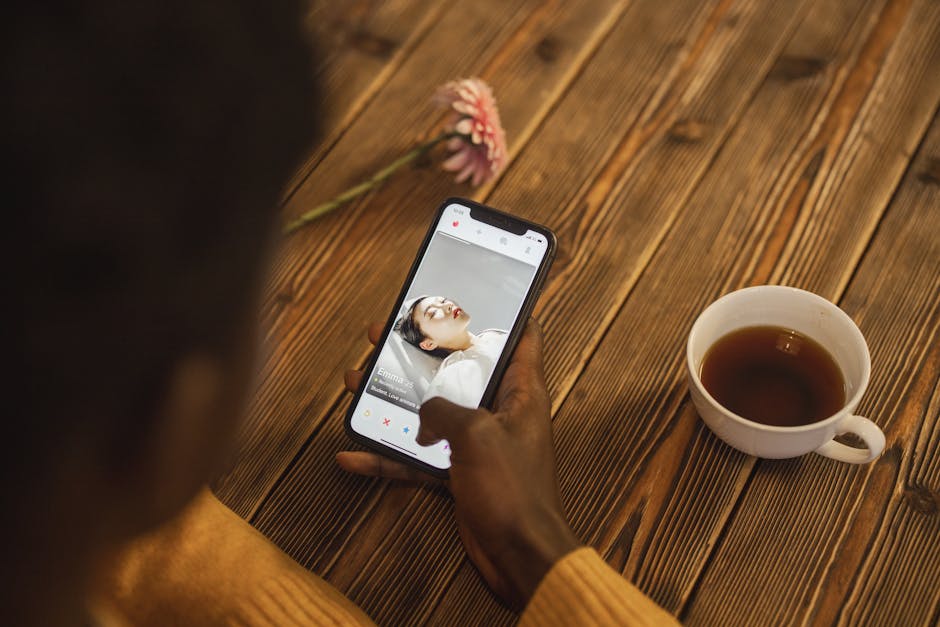
Here's where it gets horrible. Last week, my sister convinced me to try online dating. I've been lonely, and Sarah's been gone long enough that I think I'm ready to meet someone new. While swiping through profiles, I found Michael's account. That's not the problem — we're both single adults. The problem is that his main profile photo is a picture of Sarah.
It's one of her self-portraits, actually — this gorgeous black and white shot she took in our bathroom mirror about a year before she got sick. She's wearing this vintage slip, and the lighting is perfect, and she looks radiant. I remember when she took it because she was so proud of how it turned out. She posted it on her Instagram with some caption about self-love and body positivity.
But Michael is using it as his own photo. His profile says he's 38 (he's actually 41), lists photography as his hobby (he can barely work his iPhone camera), and includes details about loving indie films and hiking that were definitely Sarah's interests, not his. It's like he's catfishing people using my dead wife's identity.
I'm horrified, but I'm also confused about my own reaction. Do I have any right to be upset? Sarah's photos are all over the internet — her Instagram is still up, and her photography website is still live because I haven't had the heart to take it down. Technically, anyone could use her photos. But this feels different because it's Michael, because he knew her, because he's deliberately deceiving people.
I also can't stop thinking about the women who might be talking to him, thinking they're talking to Sarah. What happens when they meet in person? Is he planning to explain that he used his dead friend's photo because he thought she was prettier than him? The whole thing feels deeply wrong, but I don't know if that's because it IS wrong or because I'm still protective of Sarah's memory.
Sarah's sister Emma thinks I should report his profile to the dating app. My therapist thinks I should talk to Michael directly. My sister thinks I should stay out of it entirely. Part of me wonders if this is some weird grief response on Michael's part — maybe he misses Sarah so much that he wants to BE her somehow. But another part of me is just angry that he's using her image to deceive strangers.
I keep thinking about what Sarah would want. She was always generous with her work — she gave photos away for free to friends, let people use her images for good causes. But she was also fiercely honest. She hated any kind of deception or manipulation. I think she'd be hurt that someone was using her image to lie to people.
Should I confront Michael? Report him to the app? Talk to Sarah's family? Or should I just block his profile and try to forget I ever saw it? I don't want to be the grief police, but this feels like a violation of something sacred. I'm lost.
— Haunted by Pixels in Portland, OR
The Ethics of Digital Identity After Death
Let's start with what's happening here ethically. Michael is engaging in identity fraud — not just the legal kind, but the moral kind. Human dignity includes our ability to control our own narrative and presentation to the world. When Michael uses Sarah's photograph and adopts her interests as his own, he's violating what ethicists call posthumous dignity — the idea that our identity and integrity don't simply vanish when we die. This isn't abstract philosophy. You're dealing with what grief counselors call complicated mourning — when grief becomes entangled with ethical dilemmas that our loved one can no longer help us navigate. Your instinct that Sarah would be "hurt" by this deception matters. It suggests you're still in relationship with her values and integrity.Understanding Michael's Behavior
Your intuition about Michael's motivations may be more accurate than you realize. What you're describing sounds like what psychologists call unhealthy continuing bonds — when our natural desire to maintain connection with the deceased becomes destructive. Some grief researchers have documented cases where loss manifests as identity confusion — when someone's sense of self becomes so destabilized by grief that they begin to merge their identity with the deceased person. Michael may not be consciously trying to deceive people; he may be unconsciously trying to keep Sarah alive by becoming her. This doesn't excuse his behavior, but it helps explain it. And it points toward a response rooted in compassion rather than punishment.The Harm to Others
We also need to consider the women being deceived by Michael's profile. Deception in intimate contexts is particularly harmful because it undermines the foundation of trust necessary for genuine human connection. The women messaging Michael believe they're connecting with someone who shares Sarah's aesthetic sensibility, her creative spirit, her way of seeing the world. When they meet him in person, they'll experience what psychologists call reality shock — the disorienting discovery that someone they thought they knew doesn't exist. This can be genuinely traumatic. Michael's actions create a cascade of potential harm: to Sarah's memory, to his own psychological healing, and to innocent people who deserve honesty in their search for connection.Your Path Forward
You have both a moral obligation and a practical opportunity to act, but how you act matters enormously. Your first obligation is to Sarah's memory and to the principle of truth. You have a duty to prevent deception when you encounter it, particularly when that deception causes harm to others. You're not being the "grief police" — you're being a guardian of integrity. Your second obligation is to Michael's wellbeing. If he's acting out of unresolved grief rather than malicious intent, punishment won't help him heal. What he needs is intervention and support. Here's what I recommend: First, reach out to Michael directly. Don't approach this as an accusation, but as a concerned friend. You might say: "Michael, I saw your dating profile, and I'm concerned about you. Using Sarah's photo seems like it might be coming from a place of pain, and I want to make sure you're okay." Second, give him a clear deadline to change the profile himself. Explain that while you understand he's grieving, using Sarah's image to deceive potential partners isn't fair to them or healthy for him. Give him 48 hours to update his profile with his own photos. Third, if he doesn't comply, report the profile to the platform. Most dating apps have straightforward processes for reporting fake photos. You don't need to make this personal — it's simply enforcing community standards that exist to protect everyone. Fourth, consider reaching out to Sarah's family. Not to create drama, but to let them know what's happening. They may want to take steps to protect her other images online, and they deserve to know if someone is using her likeness inappropriately.The Deeper Questions About Love and Memory
Beyond the immediate practical concerns, your letter raises profound questions about how we love people after they're gone. Your protective instinct toward Sarah's memory is a form of love. Your concern for the women being deceived is compassion. Your worry about Michael's psychological state is friendship. You're not overreacting — you're being human in the face of an impossible situation. Sarah told you she hoped you and Michael would take care of each other. Taking care of someone sometimes means stopping them from doing something harmful, even if they don't understand why it's harmful. Taking care of Sarah's memory means protecting her image from being used in ways that would have violated her values.Moving Forward with Grace
Whatever you decide about Michael's profile, be gentle with yourself as you navigate dating again. Seeing Sarah's photo in that context must have been jarring and painful. It's okay if this experience makes you want to step back from dating for a while. Healing isn't linear, and encountering the unexpected ways that loss continues to complicate our lives is part of the ongoing work of loving someone who's gone. Consider talking to your therapist about this experience and what it's brought up for you. Consider also whether there are ways you want to honor or protect Sarah's digital legacy going forward. There's no right answer, but there may be choices that feel more aligned with your values and Sarah's.While David interprets Michael's use of Sarah's photos as deceptive catfishing, Michael might view this as a deeply personal tribute — a way of keeping Sarah's memory alive in his search for connection. Some grief counselors note that bereaved individuals occasionally incorporate deceased partners' images into their healing process, not to deceive others but to maintain psychological proximity to their lost loved one during vulnerable moments.
David's strong emotional reaction might reflect his own unresolved grief and possessiveness over Sarah's memory rather than purely ethical concerns. As Sarah's widower and Michael's ex-partner, David occupies a complex position where his personal feelings about both relationships could be influencing his assessment of what constitutes appropriate posthumous image use.
Key Takeaways
- Michael's use of Sarah's photo constitutes identity fraud and violates ethical principles of posthumous dignity and dating app honesty standards
- Approach Michael with compassion first, recognizing this may be a grief response rather than malicious deception
- Give him a clear opportunity to correct the situation before involving platforms or other parties
- Your protective instinct toward Sarah's memory and concern for potential victims reflects healthy moral reasoning, not possessiveness
- Consider this an opportunity to think more broadly about how you want to honor and protect Sarah's digital legacy
- Be patient with yourself as this situation may trigger fresh grief and complicate your own journey toward new relationships